
What are Layer 2 protocols?
SummaryLayer 2 (L2) protocol is a secondary or external framework built on top of an existing blockchain network that is designed to make it more scalable, flexible, and responsive. Cryptocurrency investors can buy the underlying tokens behind these projects, which is similar to buying shares in the “companies” that make L2s.
Blockchain networks such as bitcoin and Ethereum are referred to as “layer 1” networks. They are the basic layers in which transactions occur. As these L1 networks become increasingly popular, they cannot handle the increased demand as they can only handle about 20 transactions per second (tps).
To solve this problem, developers are building “layer two” solutions that can improve the performance of their core threads:
- Bitcoin (L1) has the Lightning (L2) network
- Ethereum (L1) has a polygon (L2).
- There are many others, all vying to be the primary Tier 2 in their Tier 1.
Our investment thesis is that In the long run, there will likely be one or two large L1-type blockchains (Technological industries tend to consolidate over time.) Likewise, we believe There will be one or two Tier 2 Grand Winners for each of these L1 blockchains (Developers and users tend to lock level 2 which works best).
Investor takeaway: Just as we now invest in Tier 1 winners and hold for the long term, we believe smart and patient investors can invest in Tier 2 winners and likely see massive returns in five years or less.
However, investing in L2s carries additional risks. You bet on the ultimate winner in the first level And the L2 winner. For this reason, the safest option is to simply invest in L1.
L2s L1s Acceleration
Layer 2 protocols help Layer 1 block chains move faster. They can handle more transactions per second and can be adopted at wider scales.
You can think of it as a car tuning modification. You add external elements to improve the vehicle’s performance (ie speed, control and power). Similarly, we can add secondary frameworks to existing block chains to enhance their performance and support their adoption on larger scales.
As with the modified cars, while the L2s improve the L1s’ base speed, they come with their own set of trade-offs:
- Another technique means smashing more stuff.
- Users and developers have to learn how to connect to different networks.
- To speed things up, L2s can require a bit more centralization.

Common second layer methodologies
There are many Layer 2 protocols with different designs and approaches. Today, we distinguish four major Tier 2 methodologies: ZK-Rollups, Sidechains, Channels, and Plasma.
ZK-Rollups
Zero knowledge aggregations are collections of data organized in the form of Merkel trees and stored in a smart contract on the L1 chain. Instead of performing all computation settlement on-chain, the data is first moved off-chain for processing and computation, and then logged in one go on the L1 chain.
By doing “hard work” off-chain, ZK-Rollups can create a new block every minute, being able to process around 2,000 tons per second (“zero knowledge” comes from Zero-knowledge proofswhich is a way for you to prove that data is correct without actually having to disclose it).
Investors OpportunitiesSome of the more popular ZK-Rollup solutions are:
- starkent, used by Ethereum-based decentralized exchanges dYdX and ImmutableX. StarkNet doesn’t have a token, but one is coming.
- zkSync, used by dApps such as FRAX and Yearn Finance. No token yet, but One has been announced.
side chains
Unlike ZK-Rollups that rely directly on Layer 1 networks, sidechains are separate blockchains of smaller size. They work independently and use their own consensus algorithms. The side chain connects to Layer 1 networks such as Ethereum through a two-way bridge.
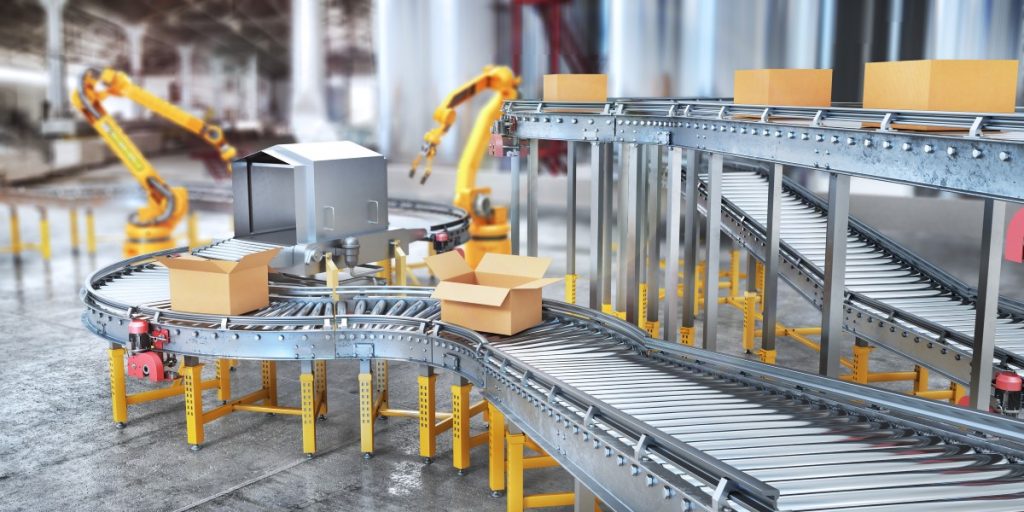
For example, consider a factory with boxes that carry a main conveyor belt. When there are too many bins to belt, workers can move the bins to side rooms with secondary conveyor belts.
Most sidechains are developed for Ethereum and are compatible with the Ethereum Virtual Machine (EVM), but there are examples of sidechains built for Bitcoin. It is worth noting that side chains are less decentralized, having fewer nodes (they are built for speed rather than decentralization).
Unlike other Layer 2 solutions discussed here, side threads are responsible for their own security, which is ensured by their consensus algorithms.
The side chain can enhance scalability and increase productivity by processing transactions independently and processing them faster and at lower costs.
Investor opportunity: One of the most popular side chains is ribbedLayer 2 solution built for Ethereum (Token: MATIC).
channels
Channels allow the creation of peer-to-peer (P2P) channels between two parties. This allows them to exchange unlimited amounts of off-chain transactions with only two transactions sent to the underlying Layer 1 network.
- The first transaction triggers the communication between the main chain and the channel.
- The final transaction closes the connection between the main blockchain and the layer 2 solution.
A common analogy is the ribbon tab. You open the tab when you arrive, have two drinks and a plate of nachos, then close the tab when you leave, and you pay the total. Like the ribbon tab, channels maintain an open connection between two ends and close it when their work is done.
Channels take most transactions away from the main network, and process them off-chain. This significantly increases the speed of transactions, reduces fees and delays.
Investor opportunity: The most common channel solution is lightning network, which was created to expand the reach of bitcoins. A merchant can integrate the Lightning Network to accept bitcoin payments with instant confirmations at low fees. The Lightning Network does not have a token, so the investor simply buys the bitcoin and holds it.
plasma
Plasma solutions share some similarities with rolls and side chains. It is made up of Merkle trees that create additional chains to the underlying block chains. Let’s call this children’s chains.
This scaling solution can support faster transactions at lower costs as the blocks are settled into L2 sub-chains instead of L1 master-chains. L1 chains and their sub-chains are linked through smart contracts that state the rules that guide each sub-chain.
For this reason, Plasma solutions only work with smart contract blockchains like Ethereum. Contracts act as bridges that enable participants to move tokens between L1 and the subchains.
Plasma solutions are not suitable for more complex transactions, which is why they may not be ideal for some decentralized finance (DeFi) activities.
One of the drawbacks of Plasma solutions is the long waiting period for users to pull tokens from Layer 2 to Layer 1. Sometimes they have to wait more than a week for transactions to be verified and approved.
The second most common layer
Here are some examples of Layer 2 solutions developed to scale Bitcoin and Ethereum:
Lightning Network (investment code: BTC)
As mentioned earlier, the Lightning Network is a Layer 2 solution aimed at accelerating bitcoin transactions. It is used as a payment channel and can transfer bitcoin transactions off-chain, allowing bitcoin to be used for near-instant payments.
The Lightning Network makes use of blockchain smart contracts to allow users to create off-chain payment bridges between two parties. For example, a local restaurant might set up a payment channel to allow users to pay with BTC. Once the channel goes live, users can make an unlimited number of bitcoin payments, with off-chain transactions instantly confirmed. Once the restaurant closes the payment channel, all transactions are merged and transferred to the main Bitcoin blockchain.
Without the Lightning Network, bitcoin payments are slow and expensive. This makes BTC impractical for most payments.

 Polygon (investment code: MATIC)
Polygon, formerly known as Matic, is a second layer lateral solution for Ethereum. It was developed in 2017 and has since entered the 20 largest cryptocurrencies by market capitalization ($5 billion as of this writing).
Using the conveyor belt analogy above, think of Polygon as a large conveyor belt manufacturer, aiming to scale Ethereum using a series of side chains. The platform consists of the main chain that uses the Proof of Stake (PoS) algorithm and the Polygon Software Development Kit (SDK), which developers use to create dapps compatible with Ethereum.
The great thing about Polygon Side Chains is that they can support multiple L2 technologies including Plasma Chains, ZK-Rollups and Optimistic Rollups.
 Loopring (investment code: LRC)
episode It is an Ethereum-based protocol that enables developers to build efficient decentralized exchanges (DEXs). The Loopring ecosystem, founded by former Google software engineer Daniel Wang, includes the same protocol, DEX, and a token.
Loopring aims to support efficient DEXs on Ethereum by routing and processing off-chain trades through ZK-Rollups. If you are just joining us, DEX does not use centralized exchanges like Binance or Coinbase, but instead matches buyers and sellers in a decentralized way. It’s all done through code.
With ZK-Rollups, Looprings DEXs help provide faster settlements to traders. Instead of settling trades directly on Ethereum, ZK-Rollups allows Loopring DEXs to complete major off-chain calculations.

Arbitrum (investment token: ETH)
Arbitrum is a Tier 2 solution for Ethereum that uses so-called Optimistic Rollups. While the main Ethereum network can handle about 15 tps, Arbitrum can increase that number to around 40,000 tps. It’s also cheaper, with transactions on Arbitrum costing less than 2 cents. Compare that to several dollars on Ethereum.
Last year, Arbitrum (Developed by Offchain Labs) Raised $120 Million In a Series B funding round. This reflects institutional investors’ confidence in Layer 2 solutions capable of scaling Ethereum.
As of this writing, there is no dedicated code for Arbitrum. Investors should invest in ETH, the underlying L1.
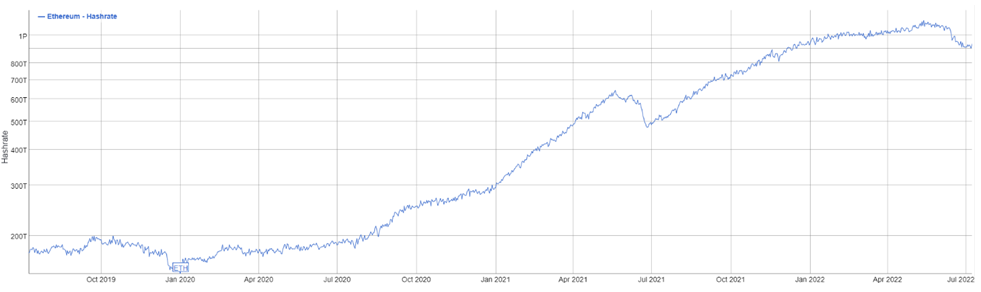
Ultimate Investor: Find Level Two Winners, Buy and Keep
Layer two solutions are essential for blockchain adoption across finance and other sectors. With the number of users growing, Bitcoin, Ethereum, and other Layer 1 networks must deal with congestion, high transaction fees, impeding adoption, and inconveniencing users.
Layer 2 solutions do a great job of scaling these L1 networks and helping them become faster and more resilient. In this way, they are accelerating the adoption of the blockchain.
The smart and patient investor can find the top winners and keep them for the long term. It could be like investing in Microsoft in 1999.
Subscribe to the Bitcoin Market Journal newsletter to get notified about new investment opportunities in L2 – find out before the market does!
0 Comments